
Forged ironwork in and around a Canadian home covers a wide range — from small interior pieces like coat hooks and curtain rod brackets to substantial exterior work like gate hardware, fence panels, and garden railings. The differences in durability between hand-forged and machine-pressed iron pieces are real, but they depend on which type of piece you are comparing and how it will be used.
How Hand-Forged Differs from Cast and Pressed Iron
The three common methods for producing iron decorative pieces are forging, casting, and pressing. Each produces a different internal structure in the metal.
Forging works hot metal under repeated hammer blows, aligning the grain structure of the steel and compressing it. The result is a piece with high tensile strength and resistance to bending under load. A forged hook or bracket can take considerable side-loading without cracking. Forged pieces also carry surface texture from the hammer — slight facets, rounded corners, and scale marks that are the visible evidence of hand work.
Casting pours molten metal into a mold. Cast pieces can reproduce complex shapes cleanly, but the cooling process introduces porosity and the grain structure is random rather than aligned. Cast iron is brittle in bending — it resists compression but fails suddenly when flexed. Decorative cast pieces are fine for visual applications where they carry no structural load, but should not be used as functional coat hooks or load-bearing brackets without testing.
Pressed steel stamping produces flat or gently curved shapes quickly at low cost. The metal is cold-worked, which hardens it somewhat, but the thickness is typically thin and the edges are not worked. Pressed pieces are identifiable by their uniform thickness and perfectly sharp corners — characteristics that hand-forged pieces do not share.
Interior Ironwork: Hooks, Brackets, and Hardware
Coat hooks and door hardware represent the most common hand-forged interior accessories in Canadian homes. A well-made forged coat hook in 1/2" square mild steel stock, drawn to a point or scrolled at the tip, will take the weight of a heavy winter coat and a bag without flexing. The key structural considerations are the mounting plate thickness and the length of the hook projection — a longer projection increases the lever moment on the wall fasteners.
Curtain rod brackets in forged iron can support cast-iron or solid steel rods with appropriate wall anchoring. Unlike pressed brackets, forged brackets can be made with adjustable wall spacing if the smith is accommodating them to a specific reveal depth. This kind of custom accommodation is not available in manufactured hardware.
Fireplace tools — pokers, tongs, brushes, and log stands — are among the most practical hand-forged items for Canadian homes with wood-burning fireplaces or stoves. Forged fireplace tools have no plastic components and no painted finishes that burn off. A set made from 1/2" or 5/8" round stock in mild steel will last for decades.
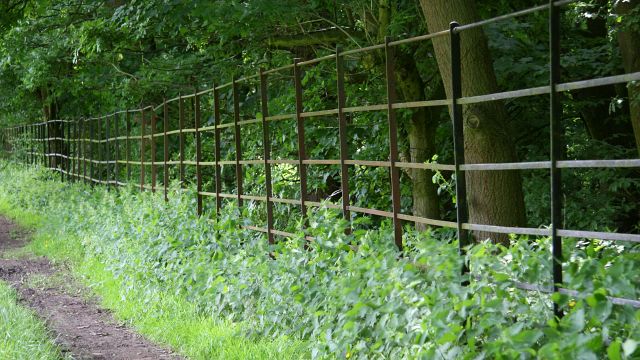
Exterior Ironwork: Fence Panels, Gates, and Garden Hardware
Exterior forged iron faces the most demanding conditions a piece will encounter — Canadian temperature swings, freeze-thaw cycles, moisture, and UV exposure. The material itself handles these conditions well when properly finished. The failures that occur in exterior ironwork almost always begin at the finish layer, not the metal.
Fence panels and garden railings made from mild steel stock require a rust-inhibiting primer coat followed by a topcoat of exterior paint or a wax-based protective finish. Black oxide or hot oil finishes applied at the forge provide some initial protection but are not durable in wet outdoor conditions without a topcoat. Beeswax applied to a heated forged piece and wiped in while warm is a traditional finish that works reasonably well in sheltered outdoor applications, but needs periodic renewal in exposed settings.
Gate hinges and latches made by a smith are typically heavier gauge than commercial hardware and can be fitted precisely to a specific gate weight and swing radius. A gate that sags on its hinges after a few years is usually the result of under-specified hardware — most production gate hinges are rated for lighter residential gates, not the heavier frames common in estate fencing or farm gates.
Identifying Quality in Forged Iron Pieces
When examining a forged piece for purchase or assessment, a few details indicate the quality of workmanship:
- Hammer marks should be consistent in pattern, not random or gouged. Consistent marks indicate controlled blows with a properly set up hammer position.
- Scrolls should be even in their spiral, tightening smoothly toward the center without kinks or flat spots. Kinks indicate the stock was bent rather than scrolled over a bick.
- Welds (if present) should be invisible in the body of the piece. A forge weld that holds is indistinguishable from solid stock; one that is beginning to separate shows a hairline or surface crack at the junction.
- The finish should be uniform. Bare patches where the finish did not adhere usually indicate the surface was not properly cleaned before finishing.
- Weight is a reasonable proxy for stock thickness. A piece that feels light for its size is probably made from thinner stock than it appears.
Candle Holders and Table Ironwork
Interior decorative pieces — candle holders, trivets, small shelf brackets, and picture hooks — are among the simplest to assess because they carry low loads. The main concern is finish quality and the stability of the base. A candle holder whose base is not flat will rock on a table; a forged trivet whose legs are unequal will sit on three rather than four points.
Decorative ironwork of this kind has a long tradition in Canada tied to settler craft traditions across Quebec, Ontario, and Atlantic provinces. Historical examples in museum collections — including pieces at the Canadian Museum of History — show the range of domestic hardware that was routinely made in local smithies through the 18th and 19th centuries.

